
Our Blogs
Looking for furniture advice before making a purchase? Explore detailed guides, expert recommendations, and answers to common questions about luxury furniture, custom sofas, bedroom furniture, and home interiors.
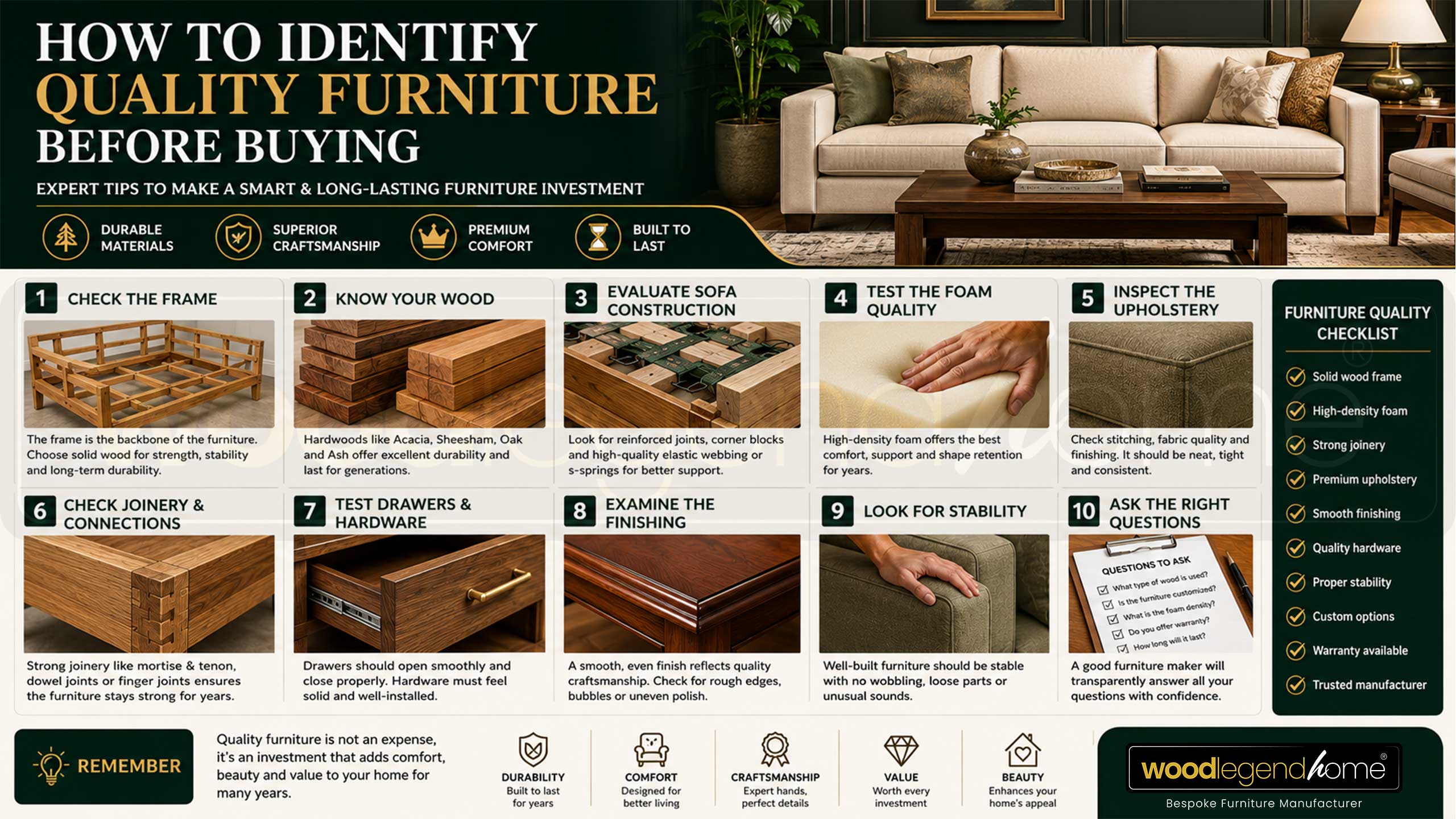
How to Identify Quality Furniture Before Buying
The Ultimate Furniture Quality Inspection Guide for Homeowners
Buying furniture is one of the most significant investments for any home. Whether you’re purchasing a luxury sofa, a designer bed, a dining table, or a complete living room set, the quality of the furniture will directly impact its appearance, comfort, durability, and long-term value.
Unfortunately, many homeowners make the mistake of focusing solely on design and price. As a result, they often end up with furniture that looks attractive initially but begins to show signs of wear within a short period.
Today, with hundreds of furniture options available both online and in physical stores, understanding how to identify quality furniture before buying has become more important than ever.
In this comprehensive guide, you’ll learn exactly what to inspect, which questions to ask, and how to evaluate furniture like an expert before making a purchase. Please visit our website and check our furniture range.
Table of Contents
- Why Furniture Quality Matters
- Signs of High-Quality Furniture
- How to Check the Furniture Frame
- Understanding Different Types of Wood
- How to Evaluate Sofa Construction
- Foam Quality and Cushion Inspection
- Upholstery Quality Checklist
- Hardware and Joinery Inspection
- Furniture Finishing and Polishing
- Questions You Should Ask Before Buying
- Common Furniture Red Flags
- Furniture Quality Checklist
- Frequently Asked Questions
- Final Thoughts
Why Furniture Quality Matters
Many buyers assume that expensive furniture automatically means high-quality furniture. However, this is not always true.
The real value of furniture comes from:
- Structural durability
- Material quality
- Craftsmanship
- Comfort
- Longevity
- Ease of maintenance
A quality piece of furniture can easily last 10–20 years or more, while poor-quality furniture may require repairs or replacement within just a few years.
Therefore, understanding furniture quality helps you make a smarter investment and avoid costly mistakes.
What Defines High-Quality Furniture?
Before inspecting specific components, it’s important to understand what separates premium furniture from ordinary furniture.
High-quality furniture typically includes:
✅ Solid wood construction
✅ Durable joinery methods
✅ Premium upholstery materials
✅ High-density foam
✅ Consistent finishing
✅ Skilled craftsmanship
✅ Proper ergonomic design
Moreover, quality furniture feels sturdy, balanced, and well-finished from every angle.
Step 1: Inspect the Furniture Frame
The frame is the backbone of every furniture piece.
Without a strong frame, even the most beautiful furniture will eventually fail.
Why the Frame Matters
The frame supports:
- Daily usage
- Weight distribution
- Structural stability
- Long-term durability
Therefore, it should be your first inspection point.
How to Check Furniture Frame Quality
Ask:
Is it Solid Wood?
Solid wood remains one of the most reliable furniture materials.
Benefits include:
- High strength
- Long lifespan
- Better stability
- Repairability
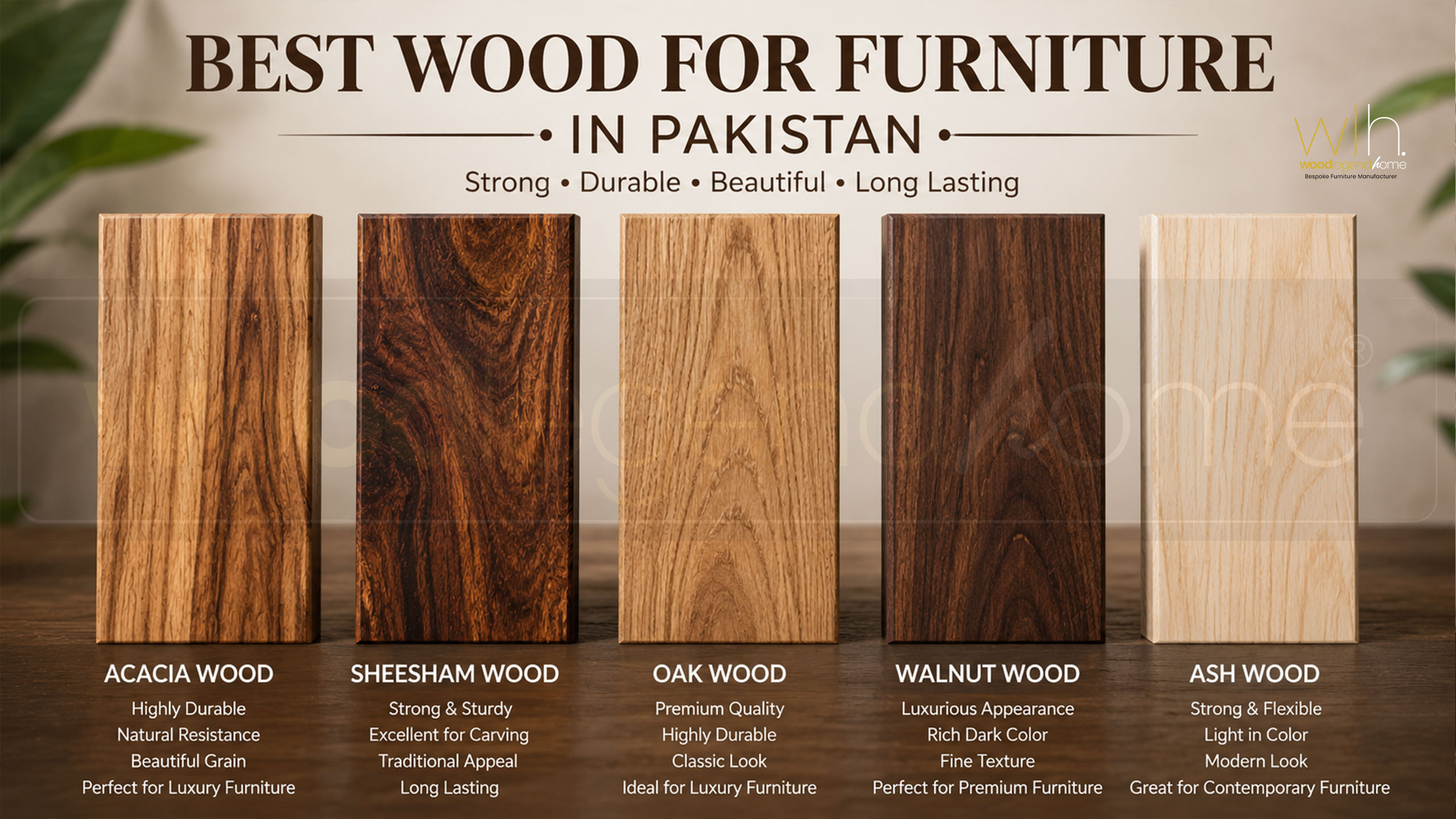
Quality manufacturers often use hardwoods such as:
- Acacia
- Sheesham
- Oak
- Ash
- Walnut
Avoid Weak Frames
Be cautious if furniture relies heavily on:
- Low-grade particle board
- Thin MDF
- Weak plywood
- Stapled construction
These materials may reduce durability significantly.
Step 2: Understand the Wood Being Used
One of the most common questions homeowners ask is:
What Is the Best Wood for Furniture?
The answer depends on the intended use.
Acacia Wood
Acacia is becoming increasingly popular because it offers:
- Excellent durability
- Attractive grain patterns
- Resistance to wear
- Long lifespan
Sheesham Wood
Traditionally known for:
- Strength
- Rich appearance
- Durability
Oak Wood
Popular for luxury furniture due to:
- High density
- Premium appearance
- Exceptional longevity
Questions to Ask
Ask the furniture manufacturer:
- Which wood is used?
- Is it solid wood or veneer?
- Is the frame fully hardwood?
- Can you show the raw wood structure?
A reputable manufacturer should have no issue answering these questions. To get a better understanding, you can contact us and get a free consultation.
Step 3: Check Sofa Construction
The sofa is usually the most-used furniture item in a home.
Consequently, poor sofa construction becomes noticeable very quickly.
Lift the Sofa Slightly
A quality sofa should feel:
- Solid
- Stable
- Balanced
If it feels unusually light, it may indicate weak internal construction.
Check for Movement
Gently shake the sofa.
A well-built sofa should not:
❌ Squeak
❌ Wobble
❌ Flex excessively
Inspect the Arms
Push on the sofa arms.
They should remain firm and stable.
Loose arms often indicate poor construction quality.
Step 4: Evaluate Cushion and Foam Quality
One of the biggest complaints homeowners have about sofas is cushion sagging.
This problem usually results from low-density foam.
What Is High-Density Foam?
High-density foam provides:
- Better comfort
- Longer lifespan
- Shape retention
- Improved support
How to Test Foam Quality
Press firmly into the seat cushion.
Observe:
Good Foam
- Returns quickly
- Maintains shape
- Feels supportive
Poor Foam
- Remains compressed
- Feels overly soft
- Loses shape easily
Step 5: Inspect Upholstery Quality
Upholstery significantly impacts both aesthetics and durability.
Therefore, fabric inspection is essential.
Examine the Stitching
Quality stitching should be:
- Straight
- Tight
- Consistent
Avoid furniture with:
- Loose threads
- Uneven stitching
- Visible fabric defects
Check Fabric Alignment
Patterns should align properly across:
- Cushions
- Arms
- Back panels
This demonstrates attention to detail.
Evaluate Fabric Quality
Popular luxury upholstery options include:
Velvet
Known for:
- Soft texture
- Elegant appearance
Bouclé
Popular because of:
- Modern aesthetic
- Rich texture
Premium Performance Fabrics
Ideal for:
- Families
- High-traffic areas
- Easy maintenance
Step 6: Examine Furniture Joinery
Joinery refers to how different components are connected.
It is one of the clearest indicators of quality craftsmanship.
Strong Joinery Methods
Look for:
- Mortise and tenon joints
- Dowel joints
- Corner blocks
- Reinforced connections
These methods provide superior strength.
Weak Joinery Signs
Avoid furniture that relies solely on:
- Staples
- Nails
- Excessive glue
These methods often weaken over time.
Step 7: Check Drawers and Hardware
For beds, dressers, side tables, and cabinets, hardware quality matters significantly.
Test Every Drawer
Quality drawers should:
- Open smoothly
- Close properly
- Remain aligned
Inspect Hinges and Handles
Good hardware should feel:
- Strong
- Stable
- Well-installed
Loose hardware often indicates poor manufacturing standards.
Step 8: Evaluate Furniture Finishing
Furniture finishing reveals a great deal about manufacturing quality.
What to Look For
Inspect:
- Surface consistency
- Color uniformity
- Smoothness
- Edge finishing
Warning Signs
Avoid furniture with:
- Rough edges
- Uneven polish
- Visible sanding marks
- Color inconsistencies
These often indicate rushed production. To get the best quality furniture, please visit our website.
Step 9: Ask About Customization Options
Professional furniture manufacturers usually offer customization services.
This demonstrates confidence in their manufacturing capabilities.
Questions to ask include:
- Can dimensions be customized?
- Can upholstery be changed?
- Can wood finishes be selected?
- Can foam density be adjusted?
Customization often indicates a deeper level of craftsmanship and manufacturing expertise. For full customization, you can check our designs.
Common Furniture Red Flags
Before making a purchase, watch for these warning signs:
❌ Furniture feels unstable
❌ Weak or squeaky frame
❌ Excessive use of staples
❌ Sagging cushions
❌ Poor stitching
❌ Misaligned drawers
❌ Rough finishing
❌ No information about wood type
❌ Unclear warranty terms
❌ Extremely low pricing
If multiple red flags appear, consider exploring other options.
Furniture Quality Inspection Checklist
Before purchasing, ask yourself:
Structure
✔ Is the frame solid and stable?
✔ Is quality wood being used?
Comfort
✔ Does the sofa feel supportive?
✔ Is high-density foam used?
Upholstery
✔ Is stitching consistent?
✔ Is the fabric durable?
Finish
✔ Is the polish smooth?
✔ Are edges properly finished?
Manufacturer
✔ Can they explain the construction process?
✔ Do they offer customization?
Frequently Asked Questions
How can I identify quality furniture?
Check the frame, wood type, joinery, foam quality, upholstery, finishing, and overall craftsmanship.
Is solid wood furniture always better?
In most cases, solid wood offers superior durability, longevity, and structural strength compared to particle board and low-grade engineered materials.
How long should a quality sofa last?
A well-constructed sofa with a solid wood frame and high-density foam can last 10–20 years or more.
What should I ask before buying furniture?
Ask about:
- Wood type
- Foam density
- Upholstery options
- Customization
- Warranty
- Manufacturing process
Why do some sofas lose shape quickly?
This usually occurs due to low-density foam, poor internal support systems, or weak construction methods.
Conclusion
Learning how to identify quality furniture before buying can save you from costly mistakes and ensure your investment delivers long-term value.
Instead of focusing solely on design or price, pay close attention to the factors that truly determine quality: solid wood construction, durable joinery, premium upholstery, high-density foam, and skilled craftsmanship.
Whether you’re purchasing a luxury sofa, designer bed, dining table, or a complete furniture collection, a careful inspection today can provide years of comfort, durability, and satisfaction.
At Wood Legend Home, every piece is designed with a focus on quality materials, expert craftsmanship, and customization to help homeowners invest confidently in furniture built to last.
Visit Our Studio
Wood Legend Home
📍 LGF 12, Defence Shopping Mall, D.H.A. Main Blvd, Iqbal Park, Lahore Explore bespoke furniture, luxury sofas, designer beds, and solid wood furniture crafted for lasting beauty, comfort, and performance.
FAQ
Q: How do you know if furniture is high quality?
A: High-quality furniture typically features solid wood construction, strong joinery, premium upholstery, high-density foam, smooth finishing, and expert craftsmanship.
Q: What should I check before buying a sofa?
A: Check the frame material, foam density, upholstery quality, stitching, comfort level, and construction stability before purchasing a sofa.
Q: Is solid wood furniture worth buying?
A: Yes. Solid wood furniture offers superior durability, longevity, repairability, and long-term value compared to lower-quality alternatives.
- Bed (2)
- Furniture (6)
- Sofa (4)
- Uncategorized (1)
- Chesterfield Sofa: The Ultimate Guide to Timeless Luxury and Custom Craftsmanship July 13, 2026
- How to Identify Quality Furniture Before Buying July 8, 2026
- Luxury Bedroom Furniture: The Complete Guide to Creating a Sophisticated Bedroom in Pakistan July 2, 2026
- Curved Sofa Pakistan: The Ultimate Guide to Luxury Curved Sofas for Modern Homes July 1, 2026
- Best Wood for Furniture in Pakistan: A Complete Buyer’s Guide June 29, 2026

GET THE LATEST UPDATES
- About
- FAQs
- Privacy Policy
- Contact
EMAIL: HELLO@WOODLEGEND.COM.PK
COPYRIGHT 2025 © WOOD LEGEND HOME. ALL RIGHTS RESERVED.